
How do you solve a problem like a Director General?
Newspaper reports suggest the BBC’s efforts to replace outgoing DG Tim Davie are in trouble

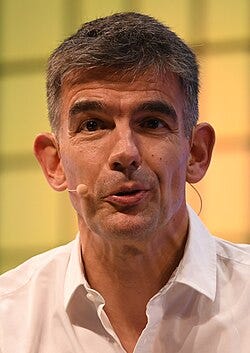
A great little scoop for The Times today with news that former Google boss Matt Brittin may be a leading candidate to be the next Director General of the BBC.
Brittin was formerly Google’s President in Europe and the Middle East, and a man so wealthy that he famously pretended he couldn’t remember how much he got paid when giving evidence to Parliament.
It tells you a lot about how the process to find Davie’s replacement is going that someone is choosing to fly a kite for Brittin.
Badly.
If you are a high-flying media executive, this is the job that you do not want. It is poorly paid (by comparison with other similar roles), a punchbag for the government, a punchbag for the press, and has nowhere near the same power to drive change as you would have in a commercial organisation.
On the other hand, all your staff will hate you.
The leaks coming from the selection process suggest that many of the widely tipped candidates - Apple’s Jay Hunt, Alex Mahon, formerly of Channel 4, and RTE’s Kevin Bakhurst – all seem to have withdrawn.
And yet, whoever gets the job this time will have a unique opportunity to reshape the BBC as a public service media giant for the next 20-30 years.
Or if they bungle it, consign it to the scrapheap of history.
The idea of bringing in a tech boss to run the BBC is almost certain to raise eyebrows. But what’s the biggest challenge facing the BBC at the moment? It is clearly navigating the end of linear broadcasting and creating a media organisation that can thrive digitally while delivering on its historic mission to inform, educate and entertain.
It makes a lot of sense to bring in someone who understands the digital landscape, has led innovative digital organisations, and has the network of contacts to support a major change to the BBC’s platforms and modes of delivery.
And while Brittin may lack experience in public service broadcasting, his background as a non-executive director of The Guardian suggests he is engaged with the media and its strategic woes.
But here’s the thing. It is always News that does for DGs.
You have to go back to John Birt to find one who was not either forced from office or finished his tenure under a cloud because of a crisis in the News division.
It was frequently suggested that Davie’s weakness was that he wasn’t a journalist and thus did not have acute enough antennae when bad news began to break, but he did at least have a solid background at the BBC.
It may be feasible to have a Deputy Director General with a solid news background who can absorb the incoming flak, allowing the DG to rise above the fray and focus on strategy. Indeed, the incoming interim DG, Rhodri Talfan Davies, might be just such a person.
But doesn’t it sound like the board couldn’t find the right person to do it all?
Scoops aside, I think this saga still has a way to run.
you forgot Mark Thompson, left on his own terms